
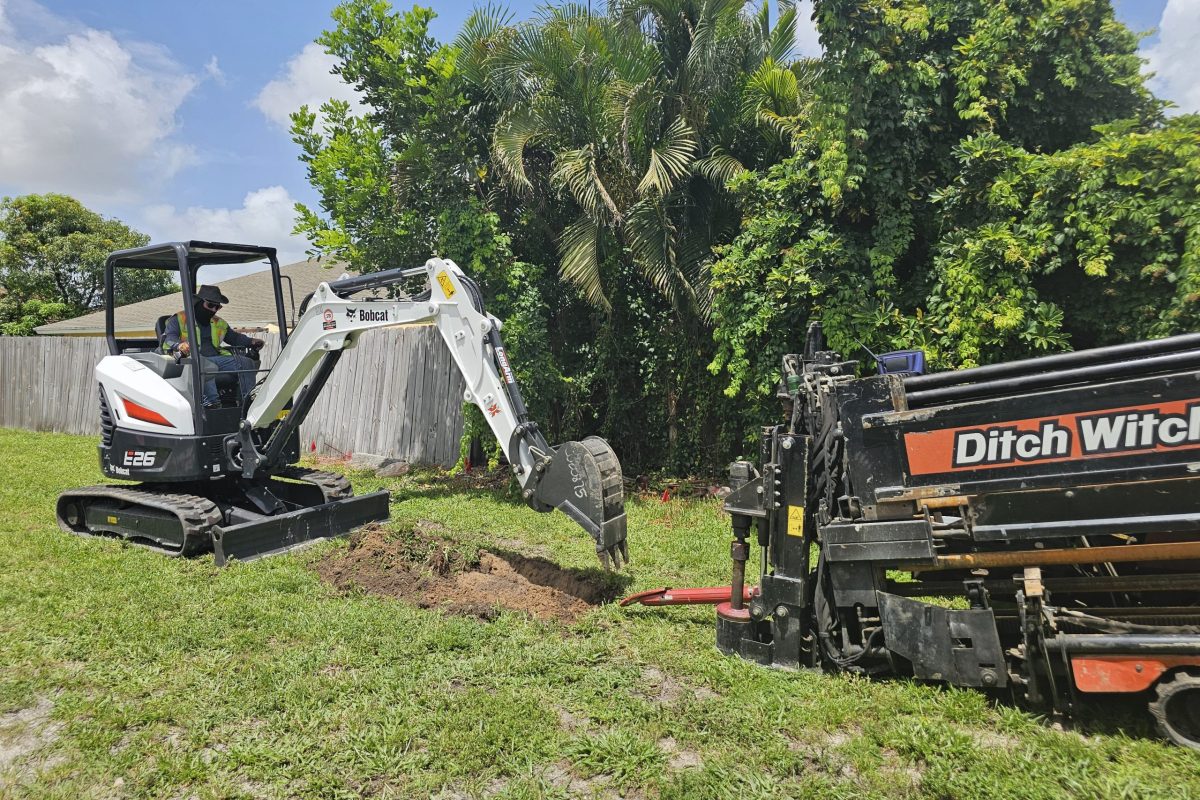
How are underground utilities detected? When you walk down a city street or across a construction site, there is a complex web of infrastructure beneath your feet. From high-voltage power lines and fiber optic cables to pressurized gas mains and water pipes, these utilities keep our modern world running. But before any shovel hits the dirt, the most critical question a contractor must answer is: How do we know exactly where they are?
Underground utility detection isn’t just about following a map; it’s about using advanced technology to “see” through the earth.
Here is a look at the primary methods used to detect underground utilities and why a multi-layered approach is the gold standard for any project.
Electromagnetic Locating (EM)
Electromagnetic locating is the industry standard for detecting conductive materials. This method relies on the physics of electromagnetism to find buried lines.
How does Electromagnetic Locating (EM) work?
A transmitter is used to apply an electrical signal of a specific frequency to a metal pipe or cable. This creates an electromagnetic field around the utility. A technician then uses a receiver to trace that field from the surface, pinpointing the location and even the depth of the line.
What does Electromagnetic Locating (EM) detect?
Steel pipes, copper wiring, and cast-iron mains. For non-conductive utilities like plastic PVC pipes, a “tracer wire” must be installed alongside the pipe to make it detectable by EM equipment.
Ground Penetrating Radar (GPR)
While EM locating is excellent for metal, it can’t always see everything. That is where Ground Penetrating Radar (GPR) comes in. GPR is a non-invasive geophysical method that uses radar pulses to image the subsurface.
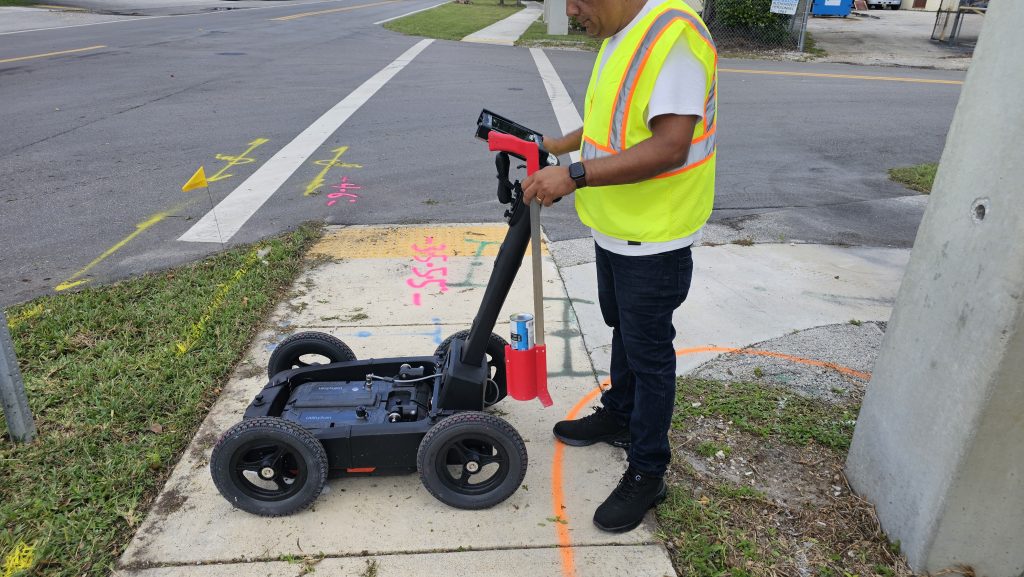
How does Ground Penetrating Radar (GPR) work?
The GPR unit sends high-frequency radio waves into the ground. When these waves encounter an object or a change in soil density, they bounce back to the surface. The system then translates these reflections into a visual “profile” of what lies beneath.
What does Ground Penetrating Radar (GPR) detect?
GPR is uniquely capable of finding non-metallic objects, such as PVC pipes, concrete sewers, and even underground storage tanks (USTs). It is also highly effective for identifying changes in soil strata or voids in the earth.
Acoustic Pipe Locating
Sometimes, the best way to find a utility is to listen for it. Acoustic locating is frequently used for water and gas lines where other methods might struggle due to depth or material.
How does Acoustic Pipe Locating work?
Technicians use ultra-sensitive microphones or “thumpers” to detect the vibrations or sounds of pressurized fluid or gas moving through a pipe. By analyzing the frequency and intensity of the sound, experts can map the path of the utility.
Vacuum Excavation (Potholing)
Technology is incredibly accurate, but in high-stakes environments, “seeing is believing.” This is where potholing via vacuum excavation comes into play.
How does Potholing work?
Once a utility has been electronically located, a small, controlled hole is “dug” using high-pressure water or air and a powerful vacuum. This allows the team to physically see the utility without the risk of damaging it with heavy machinery. Potholing is used because it provides 100% verification of the utility’s exact depth, type, and condition before major excavation begins.
Why Expert Detection Matters
Relying on old city blueprints or “as-built” drawings is never enough. Soil shifts, records get lost, and new lines are often added without proper documentation. A single “utility strike” can lead to:
Massive Costs: Repair bills and fines can reach tens of thousands of dollars.
Safety Hazards: Risk of explosions, electrocution, or flooding.
Project Delays: Work stops immediately once a line is hit, often for days or weeks.
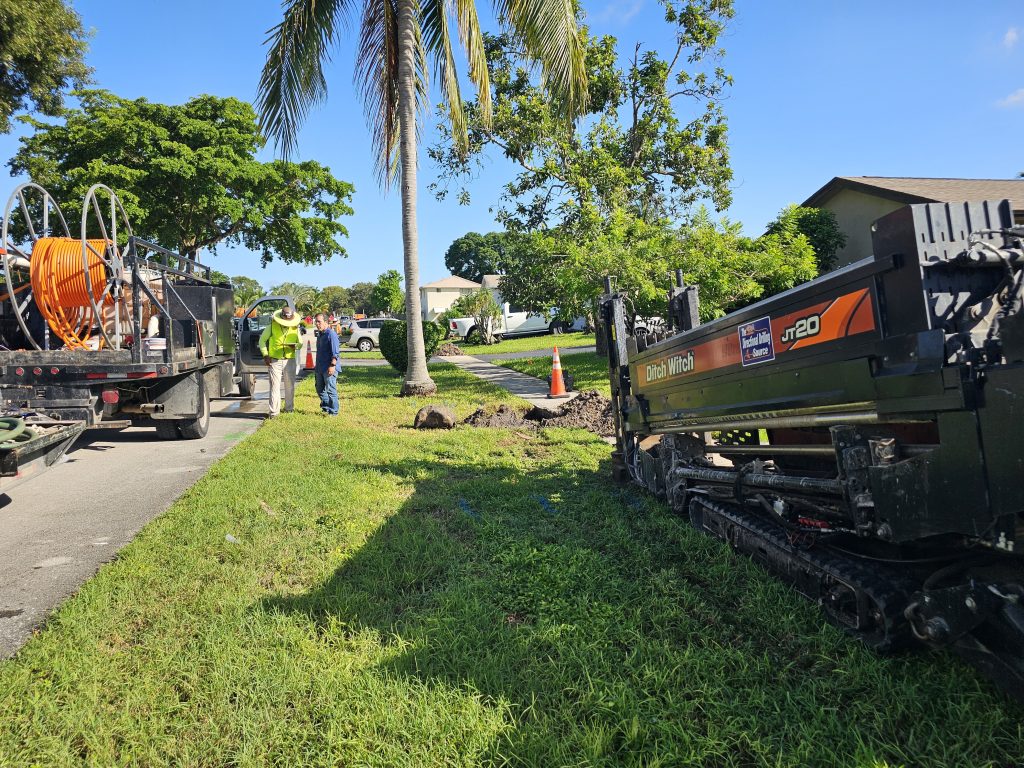
At AM Florida Builders, we don’t just use one tool; we use the right combination of tools for your specific site. Our team combines years of field experience with the latest in GPR and electromagnetic technology to ensure that every project starts with a clear, safe path forward.
Whether you are planning a large-scale commercial development or a local infrastructure upgrade, knowing what’s below is the first step to success.