
Professional GPR Utility Scanning Services in South Florida
Prevent costly utility strikes with professional Ground Penetrating Radar (GPR) scanning. Our licensed underground utility contractors accurately locate buried pipes, conduits, cables, and other underground infrastructure before excavation begins.
GPR Utility Scanning in Florida
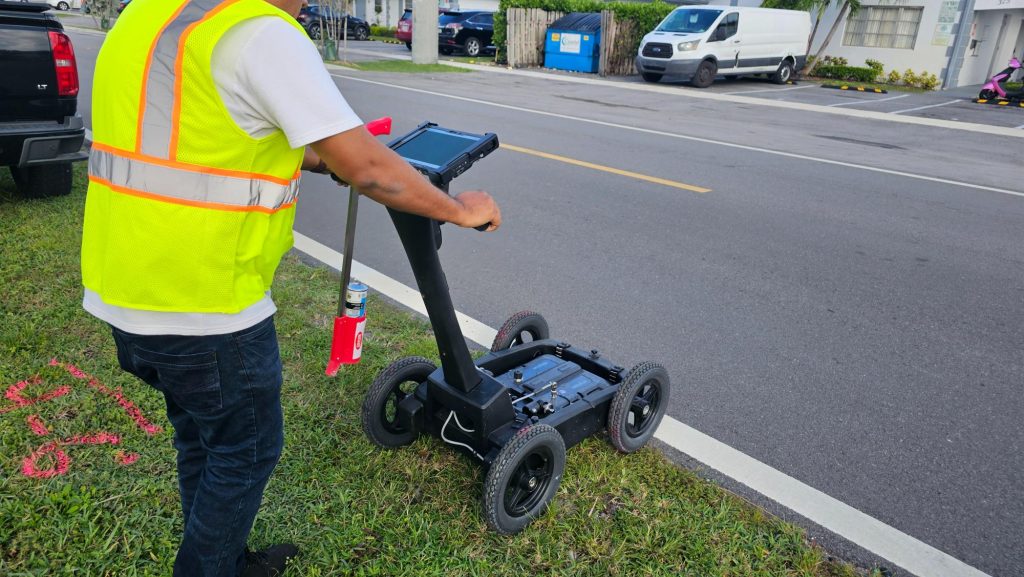
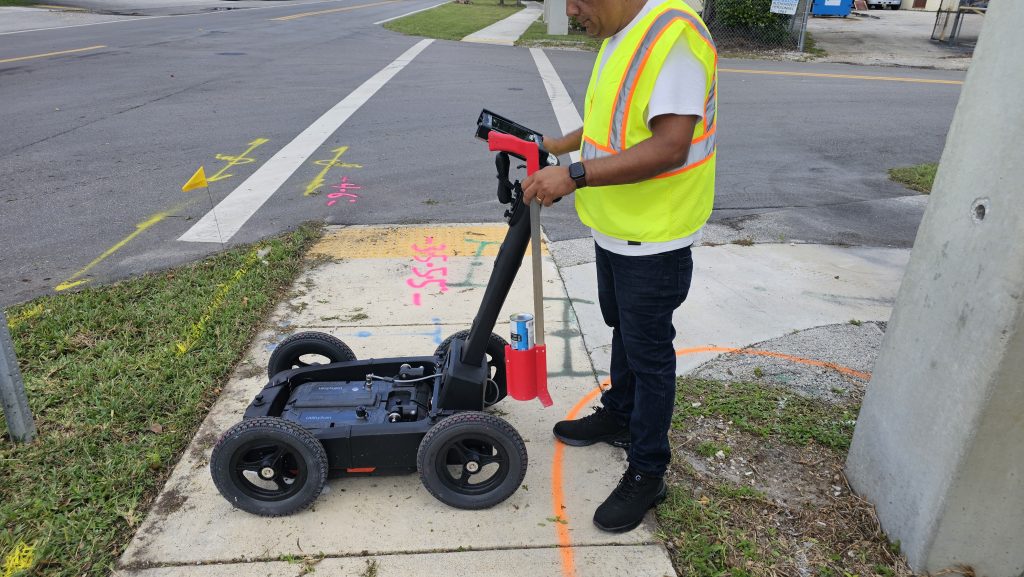
Understanding what’s beneath the surface is crucial before any excavation project. At AMFB Utility Contractors, we provide utility locating services using advanced GPR systems to ensure safe and precise mapping of buried objects. Our locating equipment helps identify underground utilities, allowing us to locate buried pipes, cables, and other subsurface structures efficiently.
Using GPR utility locator technology, we deliver detailed imaging of the subsurface, reducing the risk of costly damages and unexpected obstacles. Whether you’re planning construction or maintenance, our underground utility locating services provide the insights needed for a smooth project.
What is GPR Utility Scanning?
Before any excavation or construction project begins, it’s essential to know what’s beneath the surface. Ground Penetrating Radar (GPR) utility scanning is a non-destructive method used to locate buried utilities, underground structures, and hidden obstacles without digging.
At AMFB Utility Contractors, we use advanced GPR technology to accurately identify underground pipes, electrical conduits, communication cables, water lines, sewer lines, and other subsurface utilities. By providing reliable underground utility locating services, we help contractors, developers, municipalities, and property owners reduce the risk of utility strikes, avoid costly project delays, and improve jobsite safety.
Whether you’re planning a commercial development, installing new utilities, or preparing for horizontal directional drilling, our GPR utility scanning services provide the critical information needed to excavate with confidence.
Benefits of GPR for Your Directional Bore Drilling Projects
Enhance your underground construction projects with our GPR utility locating services. Discover why GPR is an invaluable tool for safer, more efficient, and cost-effective underground work.
Why Choose GPR for Utility Locating?
Reliable Utility Insights: GPR technology provides estimated location and depth information for both metallic and non-metallic utilities.
Non-Destructive Method: Locate utilities without excavation or damage to surrounding structures.
Cost-Effective Solution: Mitigate utility damages and minimize project delays.
Versatile Detection: Identify water lines, gas pipes, fiber optic cables, and other underground utilities.
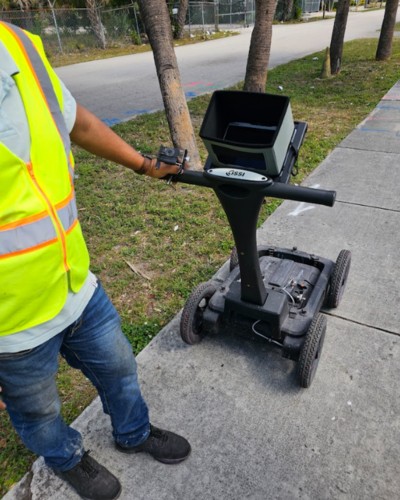
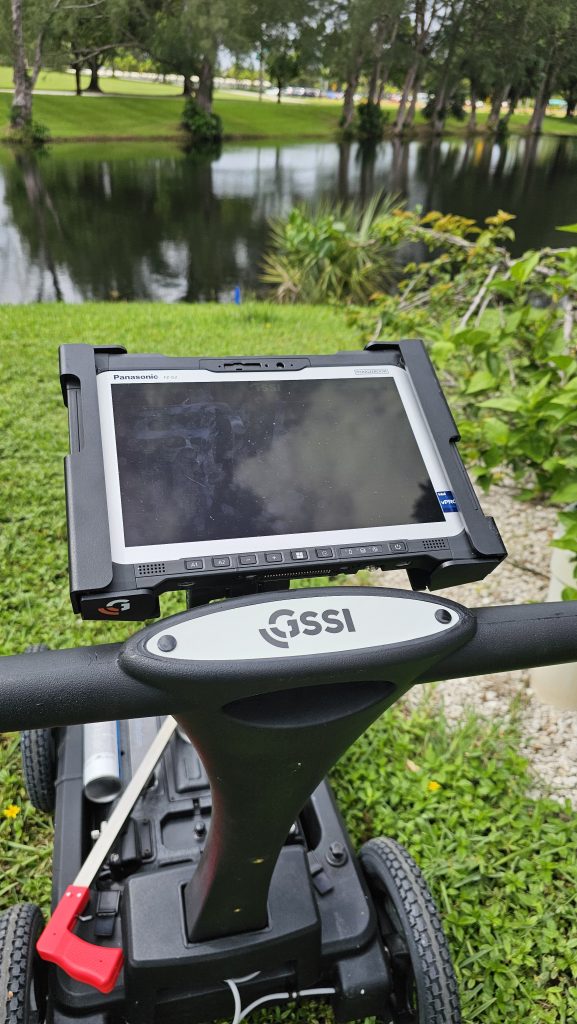
How Our GPR Utility Locating Works in 3 Steps
- 1. Send Radar Waves: We send invisible radar pulses underground to detect pipes and cables
- 2. Capture Signals: Signals: Our equipment picks up the bounce signals to find exact locations and depths
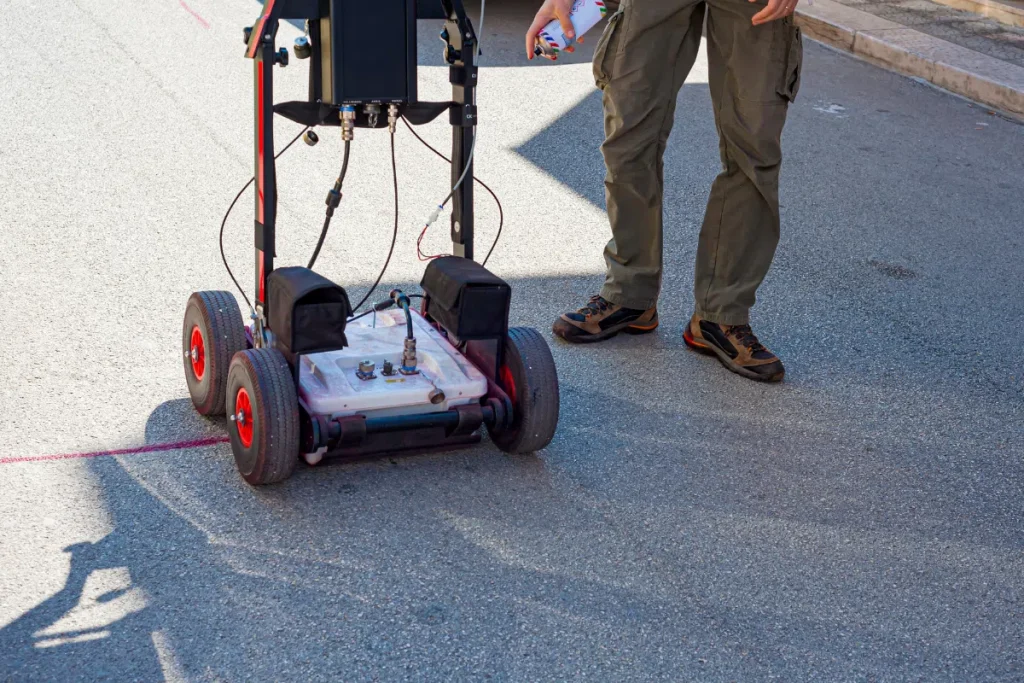
- 3. Mark & Map: We mark the spots on the surface as precise reference to guide excavation work
Whom the GPR Utility Scanning Service is For?

Construction Companies
Avoid costly accidents before you break ground — scan first, dig smart.

General Contractors & Developers
Blueprints won’t show every pipe — scan it first to build without setbacks.
Civil Engineering Firms
Design with certainty — map what’s underground before mistakes cost you the bid.

Commercial Property Managers
Don’t let a hidden utility line ruin your million-dollar upgrade.

Homeowners & Residential Builders
One bad dig can break the bank — scan your yard before you start that dream project.

Industrial Facilities & Plant Managers
One misstep under the slab could shut down operations — know what lies beneath.
Plumbing & Utility Contractors
Stop guessing and start locating — scan before you cut, drill, or dig.

Municipalities / City Governments
Public works can’t afford public mistakes — scan first, protect your people and budget.

Schools, Universities & Hospitals
Campus upgrades should never start with a safety hazard — scan, then build.
Why Choose GPR Utility Scanning?
- Locate buried utilities before excavation begins
- Reduce the risk of damaging underground infrastructure
- Improve worker and jobsite safety
- Prevent costly repairs and project delays
- Detect both metallic and non-metallic utilities
- Support accurate planning for construction and utility installation
Frequently Asked Questions
GPR can detect both metallic and non-metallic utilities, including water lines, sewer pipes, electrical conduits, communication cables, and even underground storage tanks or voids. It’s especially useful when utility depths and materials vary.
GPR (Ground Penetrating Radar) provides highly accurate depth and location estimates for underground utilities, helping project teams plan with confidence.
The technology delivers high-resolution subsurface imaging, detecting both metallic and non-metallic utilities to improve safety, reduce risk, and prevent costly mistakes.
Yes. Even if utility maps exist, a GPR survey remains essential because it verifies actual, current conditions. AM Florida Builders emphasizes the need for a layered utility map—created via GPR—to ensure you’re aware of all existing underground infrastructure, thereby minimizing the risk of damaging uncharted utilities during excavation.
GPR enhances directional drilling by providing detailed subsurface imaging and precise utility mapping. This reduces the chance of hitting unknown obstacles, prevents disruptions, and supports safer, more efficient project execution.
AM Florida Builders offers GPR utility locating services for both public and private utilities. This includes:
Locating buried pipes, electrical conduits, water leaks, and other subsurface structures
Supporting construction excavation, maintenance, and utility installation projects
Ensuring compliance with safety regulations and minimizing excavation risks
We Offer GPR Utility Scanning Services in these Counties
Get a Quote
Disclaimer
GPR can detect both metallic and non-metallic utilities, including water lines, sewer pipes, electrical conduits, communication cables, and even underground storage tanks or voids. It’s especially useful when utility depths and materials vary.