Before starting excavation, drilling, or underground utility construction, contractors need to know what is beneath the surface. Ground Penetrating Radar (GPR) can help identify underground utilities and other subsurface features without the need for extensive excavation.
But one question often comes up before scheduling a scan:
How much does GPR utility scanning cost in Florida?
There isn’t a single price that applies to every project. GPR utility scanning is typically priced based on the size and complexity of the area being investigated, the number and type of utilities present, site accessibility, expected depth, soil conditions, and the level of mapping or reporting required.
Current Florida market examples show that professional GPR and utility-locating services can range from several hundred dollars for smaller scopes to $650–$1,800 or more for many professional scanning or utility-locating projects, with larger or more complex investigations potentially costing considerably more. Some South Florida providers publish individual services around $540 and full bore-path scanning rates on a per-foot basis, while other Florida providers advertise project ranges around $650–$1,750. These figures should be treated as planning ranges rather than fixed industry rates.
The best way to determine the actual cost is to have the project evaluated based on its specific requirements.
In this guide, we’ll explain what goes into GPR utility scanning costs in Florida, what can make a project more expensive, and why getting an accurate quote is about more than simply calculating the size of the area being scanned.
What Is GPR Utility Scanning?
Ground Penetrating Radar is a non-destructive technology used to investigate what’s beneath the ground or another surface.
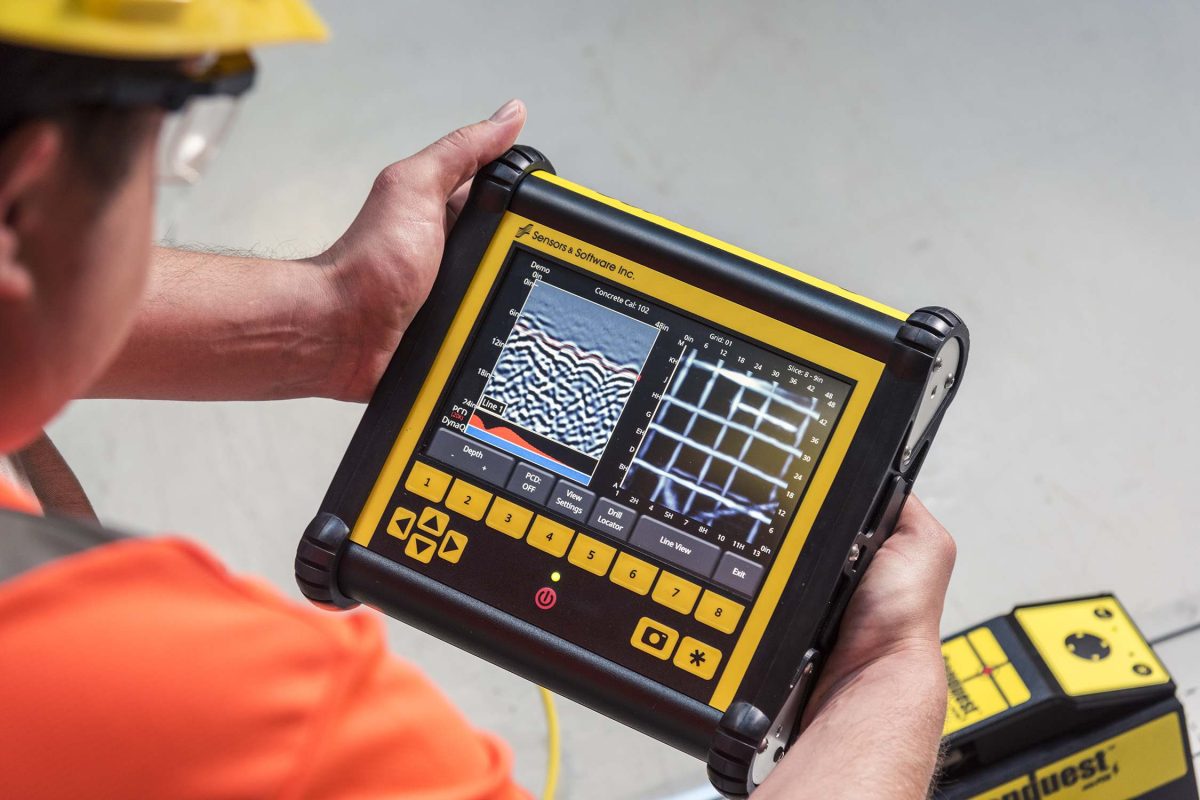
A GPR system sends electromagnetic signals into the subsurface. When those signals encounter changes in material, such as a pipe, conduit, void, concrete structure, or other buried feature, some of the energy is reflected back to the antenna.
A trained technician interprets these reflections to identify potential underground features.
GPR can potentially help locate:
- Water pipes
- Sewer lines
- Electrical conduits
- Telecommunications infrastructure
- Fiber optic conduits
- PVC and other non-metallic utilities
- Concrete structures
- Buried objects
- Voids and other subsurface anomalies
The technology can be especially useful when existing utility records are incomplete or when contractors need additional information before excavation.
However, GPR is not a replacement for every other utility-locating method. Depending on the project, GPR may be used alongside electromagnetic locating, utility records, surveying, potholing, or other methods.
How Much Does GPR Utility Scanning Cost in Florida?
Because every project is different, most professional providers quote GPR utility scanning on a project-specific basis.
As a general 2026 planning range, Florida examples indicate that professional GPR and utility-locating work commonly falls into the following broad categories:
| Project Type | Approximate Planning Range |
|---|---|
| Small or limited-area scan | Several hundred dollars |
| Typical professional utility/GPR scan | ~$650–$1,800+ |
| Larger commercial or complex utility mapping | $1,500–$5,000+ |
| Highly complex infrastructure investigation | Project-specific |
*These are not standardized Florida rates. They are useful only as general budgeting guidelines based on currently published Florida and industry pricing examples.
For example, one Florida provider currently lists professional scanning services in the $650–$1,800+ range depending on the service and scope, while another South Florida provider advertises a $540 GPR utility locating service and a separate per-foot rate for full bore-path scanning.
A recent 2026 GPR cost analysis estimates utility locating and underground infrastructure mapping at approximately $1,000–$5,000 per day, depending on site density and project requirements.
The wide range demonstrates why a flat “GPR price per square foot” isn’t appropriate for every utility investigation.
What Factors Affect GPR Utility Scanning Cost?
Several factors can change the final price of a GPR scanning project.
1. Size of the Area Being Scanned
The size of the site is one of the most obvious cost factors.
Scanning a small area around a proposed excavation point is very different from mapping an entire commercial property.
A project may involve:
- A single excavation location
- A section of roadway
- A building footprint
- A parking lot
- A utility corridor
- An entire commercial property
- A large development site
Larger areas generally require more field time, more scanning passes, and potentially more detailed mapping.
However, size alone doesn’t determine price.
A smaller site with complicated underground conditions can take longer to investigate than a larger site with a relatively simple subsurface environment.
2. Number of Utilities Present
A site containing one or two known utilities may be relatively straightforward.
A congested urban or commercial property can be much more complicated.
For example, an older commercial property may contain:
- Water lines
- Sewer lines
- Electrical conduits
- Telecommunications lines
- Irrigation
- Fire protection systems
- Abandoned utilities
- Private utility infrastructure
The more features that need to be identified and mapped, the more time may be required to complete the investigation and interpret the results.
This is one reason a contractor should provide as much information as possible when requesting a GPR quote.
3. Utility Depth
The depth of the target can affect the scanning approach and equipment used.
GPR antenna frequency involves a trade-off between depth and resolution. Lower-frequency antennas generally provide greater penetration, while higher-frequency antennas provide greater detail at shallower depths.
A shallow utility may be relatively easy to identify.
A small utility buried several feet underground can be more challenging, particularly when soil conditions aren’t favorable.
As a result, contractors should avoid assuming that a particular GPR system can reliably detect every utility at a predetermined depth.
4. Soil Conditions
Soil conditions are one of the most important variables in GPR scanning.
GPR performance can be affected by the electrical properties of the ground.
Highly conductive materials and certain clay-rich or wet conditions can reduce signal penetration and make deeper targets more difficult to detect.
Florida sites can also have significantly different subsurface conditions depending on location and geology.
A site in one part of Florida may behave very differently from a site somewhere else.
Before providing a quote, an experienced GPR contractor should consider the expected ground conditions and the type of information the project requires.
5. Site Accessibility
Getting the GPR equipment where it needs to go can also affect project pricing.
Some sites provide easy access with large open areas.
Others may involve:
- Narrow access points
- Heavy landscaping
- Fences
- Construction equipment
- Parked vehicles
- Active commercial operations
- Uneven surfaces
- Restricted work areas
If technicians need additional time to access or prepare the scanning area, the project may take longer.
6. Surface Conditions
GPR scanning isn’t limited to bare soil.
Depending on the equipment and application, technicians may scan:
- Asphalt
- Concrete
- Soil
- Paved surfaces
- Building floors
- Parking lots
A utility investigation across an open dirt area may be very different from scanning a heavily reinforced concrete or asphalt surface.
The surface can influence equipment selection, scanning speed, and the type of information that can be collected.
7. Project Location
Location can affect mobilization and scheduling costs.
A project in a major South Florida metropolitan area may have different logistical considerations from one located in a more remote part of the state.
Travel distance, parking, site access, traffic, and scheduling requirements can all affect the total project cost.
For contractors working across multiple Florida counties, it’s important to ask whether the quote includes mobilization and travel.
8. Reporting and Mapping Requirements
Not every customer needs the same deliverables.
For some projects, the primary objective may simply be to identify and mark potential utility locations in the field.
Other projects may require more detailed documentation.
Possible deliverables can include:
- Field markings
- Photos
- Depth estimates
- Utility maps
- CAD files
- Digital reports
- Site drawings
- GIS-compatible data
The more detailed the final deliverable, the more time may be required for data processing, interpretation, drafting, and documentation.
Some professional utility locating companies specifically price projects based on factors such as site size, soil conditions, utility depth, utility density, working hours, and required deliverables.
9. Turnaround Time
Standard scheduling and expedited service may not cost the same.
If a contractor needs a GPR investigation immediately because excavation is scheduled for the next morning, additional scheduling or mobilization requirements may apply.
Planning the scan early gives the contractor more flexibility and can help avoid unnecessary rush costs.
10. Whether Additional Utility Locating Is Needed
GPR isn’t always used by itself.
A professional underground utility investigation may combine GPR with electromagnetic locating and other methods.
Electromagnetic locating can be particularly useful for conductive utilities, while GPR can provide additional information about non-metallic utilities and other subsurface anomalies.
Using multiple technologies can provide a more comprehensive investigation, but it may also increase the scope and cost of the project.
Is GPR Utility Scanning Worth the Cost?
For contractors, the cost of a GPR investigation should be considered alongside the potential cost of not knowing what’s underground.
Damaging an existing utility can result in:
- Emergency repairs
- Project delays
- Equipment downtime
- Service interruptions
- Additional labor
- Restoration costs
- Safety hazards
- Potential liability
The financial impact can quickly exceed the cost of a professional utility investigation.
GPR isn’t intended to eliminate every possible underground risk, but it can provide valuable information that helps contractors make better decisions before excavation or drilling begins.
Isn’t 811 Free in Florida?
Yes, Sunshine 811 provides an important free notification service, and Florida law requires excavators to notify Sunshine 811 at least two full business days before covered excavation or demolition work begins.
However, 811 and private GPR utility scanning serve different purposes.
Sunshine 811 coordinates notifications with participating utility operators. The utility owners or their locators are responsible for locating and marking their facilities.
Private utilities may not be included in the standard 811 locate.
These can include infrastructure such as:
- Private water lines
- Irrigation systems
- Private electrical lines
- Site lighting
- Fire protection systems
- Private telecommunications lines
- Building-to-building utilities
That means an 811 ticket shouldn’t automatically be interpreted as a complete map of everything underground on a private property.
For projects where undocumented or private utilities are a concern, additional investigation may be appropriate.
Does GPR Scanning Cost More for Commercial Projects?
It can, but not simply because a project is commercial.
Commercial sites tend to have more complicated underground environments and larger areas to investigate.
A commercial property may have numerous utility systems serving multiple buildings, parking areas, lighting systems, irrigation, fire protection, and other infrastructure.
The project may also require more detailed documentation.
However, a small commercial scan may cost less than a large residential or development project.
The scope and complexity of the work matter more than the label “commercial” or “residential.”
If you’re feeling unsure on how to prepare for a GPR scanning, check out our quick guide.
Can GPR Be Used Before Horizontal Directional Drilling?
Yes. This can be an especially valuable application.
Before an HDD crew begins drilling, the planned bore path should be evaluated against existing underground utilities and other potential obstacles.
GPR can help identify subsurface features along or near the proposed bore path.
This information can then be considered alongside:
- 811 markings
- Utility records
- Electromagnetic locating
- Survey data
- Site plans
- Potholing or test holes
For HDD projects, knowing where existing utilities are located is particularly important because the installation takes place underground and may cross beneath existing infrastructure.
How Can Contractors Get an Accurate GPR Quote?
The more information you provide, the easier it is for a contractor to develop an accurate estimate.
When requesting a quote, be prepared to provide:
Project Location
Give the contractor the address and, if possible, the specific area that needs to be scanned.
Site Plans
Existing utility drawings, civil plans, survey information, or construction plans can provide useful context.
Scope of Work
Explain whether you’re preparing for:
- Excavation
- Directional drilling
- Utility installation
- Road construction
- Foundation work
- Concrete cutting
- Site redevelopment
Area to Be Scanned
Provide approximate dimensions or identify the specific work area.
Known Utilities
Tell the contractor what utilities are already known to exist.
Desired Deliverables
Let the contractor know whether you need field markings, mapping, depth estimates, reports, or other documentation.
This information helps the contractor determine the equipment, personnel, time, and methods required.
Why You Shouldn’t Choose a GPR Contractor Based Only on Price
When comparing GPR scanning quotes, the cheapest option isn’t necessarily the best value.
A professional investigation involves much more than pushing a radar unit across the ground.
The quality of the result depends on:
- Equipment selection
- Technician experience
- Scanning technique
- Site conditions
- Data interpretation
- Utility knowledge
- Documentation
- Communication with the project team
A low-cost scan that fails to identify an important underground feature can ultimately cost far more than a properly planned investigation.
Instead of asking only, “How much does GPR scanning cost?”, ask what is included in the price.
Find out:
- What area will be scanned?
- What equipment will be used?
- Are utilities marked in the field?
- Are depth estimates included?
- Is a report provided?
- Are private utilities included?
- Is mobilization included?
- Are additional locating methods available if needed?
These questions make it easier to compare quotes accurately.
Get a GPR Utility Scanning Quote From AM Utility Contractors
There is no universal price for GPR utility scanning in Florida because every site presents different conditions.
A small, accessible project with a limited scope may cost several hundred dollars, while a large commercial property or complex utility investigation can require a significantly larger investment. Current Florida service providers publish project ranges that generally demonstrate this wide variation, reinforcing the importance of project-specific pricing.
At AM Utility Contractors, we understand that underground conditions can vary significantly from one project to another. Our GPR utility scanning services are designed to help contractors, developers, property owners, and project managers investigate subsurface conditions before excavation and underground construction.
Whether you’re preparing for an underground utility installation, HDD project, excavation, or other construction work, our team can evaluate your project requirements and determine an appropriate approach.
Contact AM Utility Contractors today to discuss your GPR utility scanning project in Florida and request a project-specific quote.
Frequently Asked Questions
How much does GPR utility scanning cost in Florida?
GPR utility scanning costs vary depending on project size, utility density, depth, soil conditions, accessibility, and reporting requirements. Current Florida market examples range from several hundred dollars for smaller scopes to approximately $650–$1,800+ for many professional scanning projects, while larger or more complex investigations can cost considerably more.
Does 811 replace the need for GPR utility scanning?
No. Sunshine 811 is an important and legally required part of excavation planning, but it does not necessarily identify every private utility on a property. GPR and private utility locating can provide additional information where undocumented, non-metallic, or privately owned utilities may be present.
What factors affect the cost of GPR utility scanning?
The main factors include the size of the scanning area, number and depth of utilities, soil conditions, surface type, site accessibility, project location, required equipment, turnaround time, and the level of mapping or reporting required. Complex commercial sites generally require more time and resources than small, straightforward scans.