Trenchless construction methods, such as Horizontal Directional Drilling (HDD), have transformed infrastructure development across Florida. They allow utility companies to install gas lines, fiber optic cables, and electrical conduits quickly and with minimal surface disruption. However, this non-invasive approach comes with a hidden risk that many commercial and residential property owners are unaware of: cross bores.
A cross bore occurs when a new underground utility line is unintentionally installed directly through an existing, unmapped pipe—most commonly a sanitary sewer lateral or storm drain line. Because these intersections happen deep underground, they often go unnoticed for months or even years until a major backup or maintenance event occurs.
At AM Florida Utility Contractors, safety and subsurface accuracy are our highest priorities. In this comprehensive guide, we will break down what cross bores are, why they represent a serious safety hazard, how cross bore inspections work, and what property owners must know to protect their investments.
What Is a Cross Bore and How Does It Happen?
A cross bore is defined as the intersection of an underground utility line with an existing pipeline, compromising the structural integrity of one or both utilities.
Why Sewer Lines Are Particularly Vulnerable
When utility crews use directional drilling, they rely on surface locating tools to detect existing infrastructure. While metallic pipes and tracer wires register clearly on electromagnetic locators, gravity-fed sewer laterals present unique challenges:
Non-Conductive Materials: Most sewer laterals are made of non-metallic materials like PVC, terra cotta, clay, or cast iron, which do not emit an electromagnetic signal.
Lack of Municipal Mapping: Municipal 811 call centers locate public mainlines, but private sewer laterals running from a building to the street are rarely mapped on public records.
When a drill bit passes through a sewer pipe, the operator might not feel the resistance change. As a result, the new utility line—such as a flexible natural gas line or high-speed fiber optic cable—is pulled straight through the middle of the sewer pipe.
The Hidden Dangers of an Undetected Cross Bore
An undetected cross bore is a ticking clock beneath a property. While the initial installation might not immediately stop the flow of wastewater, it creates a structural obstruction inside the pipe.
1. Severe Gas Leaks and Explosion Risks
The most dangerous cross-bore scenario involves natural gas lines. Over time, solid waste and toilet paper catch on the gas pipe inside the sewer line, causing a severe backup. When a property owner or plumber attempts to clear the blockage using a mechanical drain auger or motorized root cutter, the rotating blade can easily cut through the plastic gas line. Natural gas then migrates back through the plumbing system into the home or commercial building, creating an immediate risk of fire or explosion.
2. Repeated Sewage Backups and Property Damage
A cross bore acts as a permanent dam inside your sewer pipe. Even if a mechanical drain machine isn’t used, wastewater will eventually back up into sinks, toilets, and floor drains, leading to costly interior water damage, health hazards, and commercial downtime.
3. Costly Structural Collapses
Damaging the sewer wall creates a breach point. Over time, surrounding soil and groundwater wash into the broken sewer line, undermining the surrounding earth. This can cause ground settling, sinkholes, and structural foundation damage on your property.
What Is a Cross Bore Inspection?
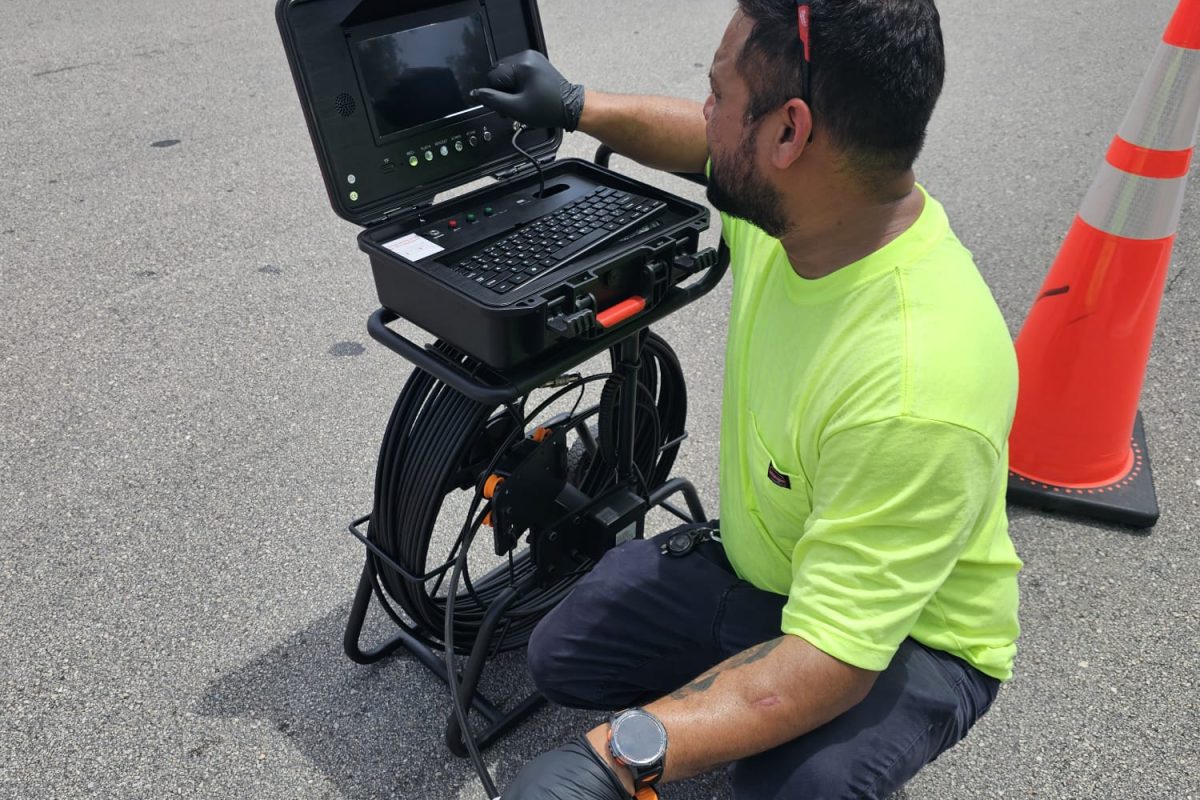
A cross bore inspection is a specialized, non-destructive survey used to identify, locate, and document intersections between utility lines and sewer or storm water systems. Utilizing advanced Closed-Circuit Television (CCTV) cameras, technicians perform a visual and electronic audit of the interior condition of the pipe.
Pre-Bore Inspections vs. Post-Bore Inspections
Cross bore management involves two key phases:
Pre-Bore Inspection: Before any directional drilling begins, technicians launch CCTV cameras into sewer mains and laterals to map their exact path, depth, and trajectory. This allows drilling crews to adjust their bore path and avoid existing infrastructure entirely.
Post-Bore Inspection: After a trenchless utility installation is complete, a follow-up CCTV camera inspection is conducted inside nearby sewer systems to verify that no accidental intersections occurred during construction.
The Inspection Process: How It Works
At AM Florida Utility Contractors, we utilize industry-leading technology to deliver clear, verifiable subsurface data. A standard cross bore inspection follows a structured process:
Step 1: High-Pressure Jetting (If Required)
If a sewer pipe is clogged with debris, roots, or grease, a hydro-jetting unit uses high-pressure water streams to clean the interior pipe walls, ensuring maximum camera visibility.
Step 2: Mainline and Lateral Camera Launch
Technicians deploy advanced Lateral Launch CCTV systems. These specialized robotic crawlers travel down the main sewer line in the street and launch a smaller, flexible secondary camera up into private lateral lines connecting to surrounding buildings. Alternatively, push-camera systems can be inserted directly from an outdoor cleanout.
Step 3: Sonde Locating and GIS Mapping
The inspection camera head is equipped with a built-in transmitter called a sonde. As the camera finds a cross bore or navigates a line, a technician above ground uses an electromagnetic receiver to pinpoint the exact surface position and depth of the camera head, recording precise GPS/GIS coordinates.
Step 4: Comprehensive Reporting
The property owner or project manager receives a full digital report including high-definition video footage, photo evidence of pipe conditions, and a mapped layout of the subsurface layout.
What Property Owners Should Do Before Clearing a Blocked Sewer
If you are a commercial facility manager, developer, or homeowner experiencing a stubborn sewer blockage, exercise extreme caution before attempting to clear it.
Critical Safety Checklist for Sewer Blockages:
Call 811 or a Professional Locator: If your sewer backup is recurring or sudden, do not immediately use a motorized mechanical drain snake.
Request a Camera Inspection First: Always insist that a licensed plumber or utility contractor insert a video camera to identify the exact cause of the blockage before running cutting tools down the line.
Look for Warning Signs: If you recently had fiber optic cables, gas lines, or electric conduits installed in your neighborhood or on your property, notify the technician immediately.
Smell Gas? Evacuate Immediately: If you notice a rotten-egg smell near drains or cleanouts, evacuate the building immediately, avoid toggling light switches, and call 911 and your local gas provider from a safe distance.
The AM Florida Utility Contractors Advantage
Cross bore prevention and detection require precision, proper licensing, and specialized equipment. At AM Florida Utility Contractors, we combine deep field expertise in horizontal directional drilling, ground-penetrating radar (GPR), and advanced CCTV pipeline inspection to safeguard infrastructure across Florida.
Whether you are a developer planning a new trenchless utility line, a municipality auditing legacy systems, or a commercial property manager addressing persistent drain issues, our team delivers reliable, turnkey subsurface solutions.
Protect Your Property and Infrastructure Today
Don’t leave what’s underground to chance. Contact AM Florida Utility Contractors today to schedule a cross bore inspection, utility scanning, or consultation for your next project.
Frequently Asked Questions
How much does a cross bore inspection cost in Florida?
The cost of a cross bore inspection depends on several factors, including the length and diameter of the pipe, accessibility of cleanouts, and whether high-pressure hydro-jetting is required to clear debris before scanning. While a basic lateral launch inspection is a fraction of the cost of a major utility repair, investing in a pre-bore or post-bore inspection prevents potential damages and safety hazards that could cost tens of thousands of dollars.
What is the difference between a standard plumber’s camera inspection and a cross bore inspection?
Standard plumbing inspections typically focus on finding blockages or cracks inside private lateral lines using a simple push-camera. A specialized cross bore inspection uses advanced Lateral Launch CCTV systems paired with electromagnetic sonde locators and GIS mapping. This allows technicians to launch secondary cameras from the main sewer line directly into private laterals and map the exact depth, surface location, and 3D path of potential utility intersections above ground.
Can a cross bore cause an immediate gas leak or plumbing failure?
Not always. In many cases, a trenchless drill bit or plastic gas line passes through a sewer lateral without immediately shutting down wastewater flow or causing a gas breach. The hazard often remains hidden for months or years until solid waste catches on the pipe obstruction, leading to a backup. The greatest danger occurs when an unsuspecting plumber uses a motorized drain auger or root cutter to clear the line, accidentally severing the gas pipe and creating an immediate gas leak.