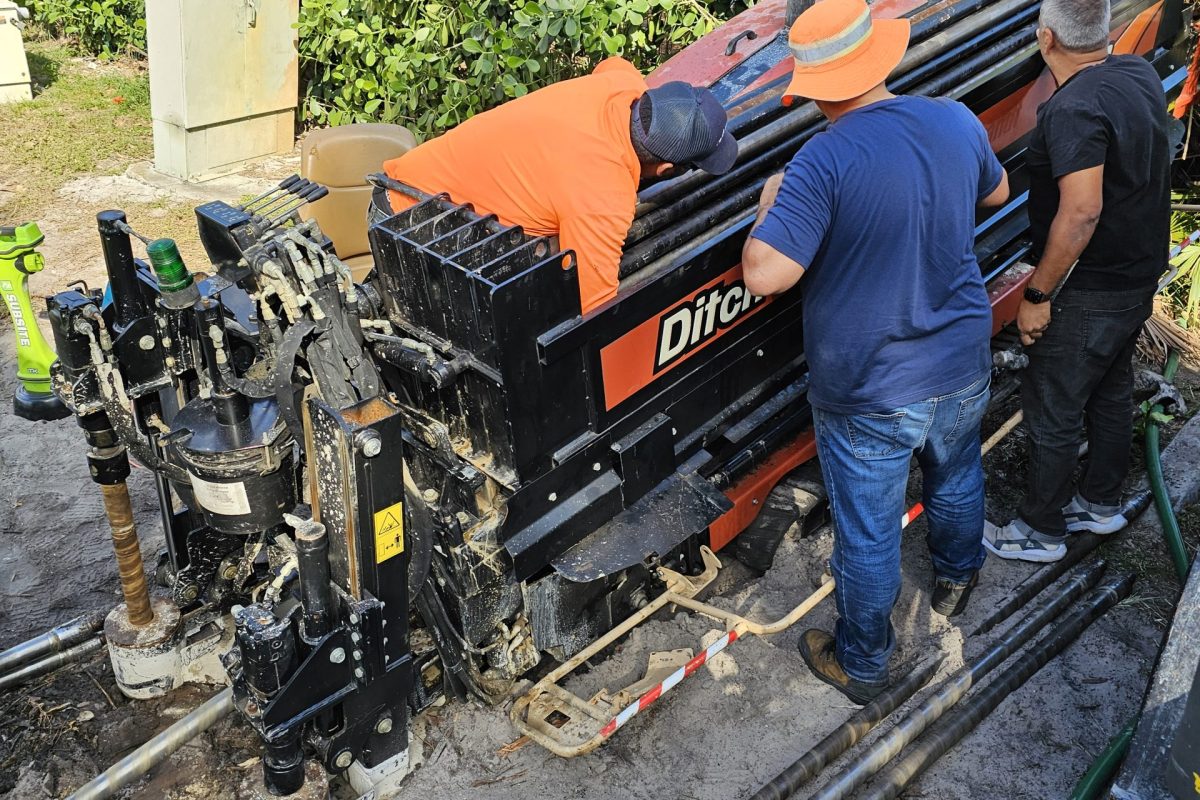
South Florida continues to experience development, redevelopment, and infrastructure improvements across residential, commercial, industrial, and public projects. As communities grow and existing infrastructure needs to be upgraded, contractors face an important challenge: how can new underground utilities be installed without unnecessarily disrupting everything above ground?
Traditional open-cut excavation can be effective for many projects, but it may create significant disruption when a utility route crosses an active roadway, parking lot, landscaped property, or other developed area.
This is one reason directional drilling in South Florida has become an important option for underground utility construction.
Also known as Horizontal Directional Drilling (HDD), directional drilling is a trenchless construction method that allows contractors to install underground utilities along a controlled bore path while minimizing continuous surface excavation.
For infrastructure projects in South Florida, this can provide an alternative to traditional trenching where preserving existing surfaces, maintaining access, or reducing disruption is important.
But directional drilling isn’t the right solution for every project.
The appropriate installation method depends on factors such as soil conditions, utility size, bore length, existing underground infrastructure, site access, project requirements, and permitting.
In this guide, we’ll look at how directional drilling works, where it can be used in South Florida infrastructure projects, its advantages and limitations, and what contractors should consider before starting an HDD project.
What Is Directional Drilling?
Horizontal Directional Drilling is a trenchless construction technique used to install underground utilities without excavating a continuous trench along the entire route.
Instead of digging from the surface, an HDD rig drills a controlled underground path between an entry point and an exit point.
The process generally consists of three primary stages.
1. Pilot Bore
The first step is creating a relatively small pilot bore along the planned alignment.
The drilling head can be steered to follow the designed path while maintaining the required direction and depth.
This is an important part of the process because the pilot bore establishes the route that the utility will ultimately follow.
2. Reaming
Once the pilot bore is complete, the hole may need to be enlarged.
A reamer is pulled through the bore to increase its diameter sufficiently for the utility being installed.
The number of reaming passes depends on factors such as:
- Pipe diameter
- Ground conditions
- Bore length
- Installation requirements
- Equipment capacity
3. Pullback
After the bore has been prepared, the pipe or conduit is connected to the drilling assembly and pulled through the completed bore.
The utility is then positioned underground without requiring a continuous surface trench.
Why Is Directional Drilling Useful for South Florida Projects?
South Florida has a highly developed built environment.
Infrastructure projects may need to work around:
- Busy roads
- Commercial properties
- Residential communities
- Parking lots
- Sidewalks
- Landscaped areas
- Drainage systems
- Existing underground utilities
- Waterways
- Other infrastructure
Opening a long trench through these areas can create substantial disruption.
Directional drilling can reduce the amount of surface excavation required, allowing the installation to pass underneath obstacles rather than requiring the contractor to remove and restore the surface along the entire route.
For infrastructure projects where maintaining access and minimizing disruption are priorities, this can make HDD a valuable construction option.
Directional Drilling for Telecommunications Infrastructure
The continued demand for reliable connectivity has made telecommunications infrastructure an important part of modern development.
Fiber optic and communications networks frequently require underground conduits to connect buildings, neighborhoods, businesses, and larger network infrastructure.
Directional drilling can be used to install telecommunications conduit beneath:
- Roads
- Parking areas
- Sidewalks
- Landscaped areas
- Commercial properties
- Residential developments
One advantage is that a contractor may be able to install conduit beneath an existing surface without opening a continuous trench through it.
This can be particularly useful when installing fiber infrastructure along an established roadway or through an active commercial property.
However, the proposed bore path still needs to be carefully investigated before drilling.
Directional Drilling for Water Lines
Water infrastructure is another potential application for HDD.
Depending on the project design and engineering requirements, directional drilling may be used to install water lines beneath roads, developed properties, or other obstacles.
A trenchless installation can reduce the amount of pavement, landscaping, or other surface material that needs to be removed.
The suitability of HDD depends on factors such as:
- Pipe diameter
- Bore length
- Ground conditions
- Required depth
- Existing utilities
- Connection points
- Project specifications
A contractor should evaluate these conditions before deciding whether directional drilling is appropriate.
Directional Drilling for Sewer Infrastructure
Directional drilling can also be used for certain sewer installations, particularly force mains and other applications where the design and site conditions are suitable.
Sewer infrastructure can present unique challenges because the system may need to maintain specific elevations and connections.
Gravity sewer installations, for example, have different design requirements from pressurized force mains.
For this reason, HDD feasibility needs to be evaluated based on the specific type of sewer system being installed rather than assuming that every sewer project is suitable for directional drilling.
Road Crossings
Road crossings are one of the situations where HDD can provide significant practical benefits.
Traditional open-cut excavation across a busy road may require:
- Lane closures
- Traffic control
- Pavement removal
- Excavation
- Utility installation
- Backfilling
- Pavement restoration
Depending on the roadway and project requirements, this can create significant disruption.
Directional drilling can allow a utility to pass beneath the roadway while leaving much of the surface intact.
This can help reduce the amount of pavement that needs to be removed and restored.
However, a road crossing still requires careful planning.
The contractor needs to understand the location of existing utilities and determine an appropriate bore profile before drilling.
Working Around Existing Underground Utilities
South Florida infrastructure projects can involve complex underground environments.
Existing utility corridors may contain:
- Water lines
- Sewer systems
- Electrical conduits
- Telecommunications cables
- Fiber optic infrastructure
- Storm drainage
- Gas utilities
- Irrigation systems
- Fire protection lines
When planning an HDD installation, the proposed bore should be evaluated in relation to existing infrastructure.
This is one reason utility locating before directional drilling is so important.
An underground bore can pass beneath the surface without being visible to the crew above ground. If an existing utility has not been accurately identified, an unexpected crossing can create significant project risks.
The Role of GPR Before Directional Drilling
Ground Penetrating Radar (GPR) can provide additional information about subsurface conditions before an HDD project begins.
GPR uses electromagnetic signals to identify changes in underground materials and can help identify potential utilities and other subsurface features.
Depending on the site, GPR may help investigate:
- Non-metallic pipes
- PVC utilities
- Electrical conduits
- Telecommunications infrastructure
- Buried structures
- Abandoned utilities
- Other subsurface anomalies
GPR is particularly useful as part of a broader utility investigation.
It does not replace required utility notifications or automatically identify every underground facility. Results can be affected by soil composition, moisture, target depth, target size, and other conditions.
For a planned HDD project, GPR can be combined with utility records, electromagnetic locating, surveying, and physical verification where appropriate.
The goal is to develop as clear an understanding of the proposed bore corridor as possible before drilling begins.
South Florida Soil Conditions and HDD
Ground conditions play an important role in directional drilling.
An HDD contractor needs to consider the materials the drilling system will encounter along the proposed bore path.
Potential conditions can include:
- Sand
- Clay
- Limestone
- Gravel
- Mixed materials
- Groundwater
Different ground conditions can affect drilling speed, tooling, drilling fluid requirements, bore stability, and equipment selection.
South Florida projects may also encounter varying subsurface conditions from one site to another.
This is why contractors should avoid assuming that an HDD method that worked on one nearby project will automatically produce the same results elsewhere.
Site-specific evaluation is important.
What Are the Benefits of Directional Drilling?
When conditions are suitable, HDD can provide several advantages over continuous open-cut excavation.
Reduced Surface Disruption
Because the utility is installed underground, the surface generally doesn’t need to be opened along the entire route.
Less Pavement Removal
Roads, parking lots, and other paved areas can potentially remain intact above the bore.
Reduced Restoration
With less surface excavation, there may be less pavement, landscaping, or other surface material that needs to be restored.
Reduced Traffic Disruption
Road crossings can potentially be completed without opening a continuous trench across the roadway.
Access to Difficult Routes
HDD can allow utilities to pass beneath obstacles that would be difficult or disruptive to excavate through.
Reduced Construction Footprint
A trenchless approach can reduce the amount of surface area occupied by excavation along the utility alignment.
These benefits can be particularly valuable on developed properties and infrastructure projects where maintaining existing conditions is important.
Is Directional Drilling Always the Better Choice?
No.
HDD has limitations, and there are situations where traditional excavation may be more practical.
For example, open-cut excavation may be appropriate when:
- The utility route is short.
- The site is undeveloped.
- There is ample excavation space.
- Surface disruption isn’t a major concern.
- Ground conditions make HDD impractical.
- The utility design requires direct access to the trench.
- The project involves an installation that isn’t suitable for trenchless construction.
In some cases, the best project approach may combine both methods.
A contractor might use traditional excavation for portions of an installation while using HDD for road crossings or other areas where surface disruption needs to be minimized.
The decision should be based on the actual site rather than choosing one installation method for every project.
What Factors Affect HDD Project Costs?
The cost of directional drilling varies significantly from one project to another.
Some of the factors that can affect pricing include:
- Bore length
- Pipe or conduit diameter
- Soil conditions
- Required drilling depth
- Existing utility congestion
- Site accessibility
- Equipment requirements
- Drilling fluid requirements
- Permits
- Traffic control
- Mobilization
- Project schedule
- Restoration requirements
A longer bore doesn’t necessarily cost more simply because of distance. A shorter but technically complicated bore can require more planning and specialized equipment than a longer, straightforward installation.
For this reason, contractors should request a project-specific estimate rather than relying on a generic price per foot.
Permitting and Project Coordination
Directional drilling projects may require coordination with property owners, municipalities, utility owners, roadway authorities, and other stakeholders.
The exact requirements depend on where the project is located and what infrastructure is being installed.
Road crossings and work within public rights-of-way can involve additional permitting and traffic-control considerations.
Contractors should determine the applicable jurisdiction early in the planning process and identify the approvals required before construction begins.
Failing to account for permitting and coordination can lead to unnecessary project delays.
Why Project Planning Matters Before Drilling
An HDD project doesn’t start when the drill rig arrives.
Much of the important work happens beforehand.
Pre-construction planning may include:
- Reviewing project plans.
- Confirming the proposed bore alignment.
- Investigating existing utilities.
- Coordinating 811 notifications.
- Locating private utilities where applicable.
- Reviewing site and ground conditions.
- Determining equipment requirements.
- Planning entry and exit points.
- Reviewing permits and access requirements.
- Identifying potential conflicts.
The more information the contractor has before drilling begins, the better positioned the project team is to identify potential problems early.
Why Private Utility Locating Matters
One common mistake is assuming that all underground utilities will be identified through the standard 811 process.
Public utility locating and private utility locating serve different purposes.
Private properties can contain infrastructure owned by the property owner or another private entity.
Examples include:
- Irrigation
- Private water lines
- Fire protection systems
- Site lighting
- Private electrical systems
- Private telecommunications
- Building-to-building utilities
These facilities may require additional investigation.
For HDD projects, identifying private utilities can be particularly important because the planned bore may pass beneath areas containing undocumented infrastructure.
Directional Drilling for Commercial and Development Projects
Commercial developments frequently require multiple underground utility systems.
A new development may need infrastructure for:
- Water
- Sewer
- Electrical
- Telecommunications
- Stormwater
- Fire protection
At the same time, construction may take place around existing buildings, roads, parking areas, and operating businesses.
Directional drilling can help project teams install certain utilities while minimizing disruption to existing surfaces and operations where site conditions allow.
The method can be particularly useful when maintaining access to a property is important.
Directional Drilling and Infrastructure Expansion
South Florida’s existing infrastructure continues to support growing communities and redevelopment.
Infrastructure projects aren’t limited to new construction. Existing systems may also need to be upgraded, extended, replaced, or relocated.
HDD can provide another installation option when a new utility needs to pass through an established area.
For example, a project may need to install new telecommunications conduit along an existing roadway or connect infrastructure across a developed commercial property.
Instead of automatically excavating the entire route, contractors can evaluate whether a trenchless approach is appropriate for portions of the installation.
Choosing an Experienced Directional Drilling Contractor
Directional drilling requires specialized equipment, technical knowledge, and careful planning.
The contractor needs to understand both the drilling process and the underground environment in which the work will take place.
Experience can be particularly valuable when projects involve:
- Complex bore profiles
- Existing utility congestion
- Road crossings
- Commercial properties
- Long-distance installations
- Difficult access
- Variable ground conditions
A contractor who evaluates the project before mobilization can help identify potential challenges and determine whether HDD is an appropriate installation method.
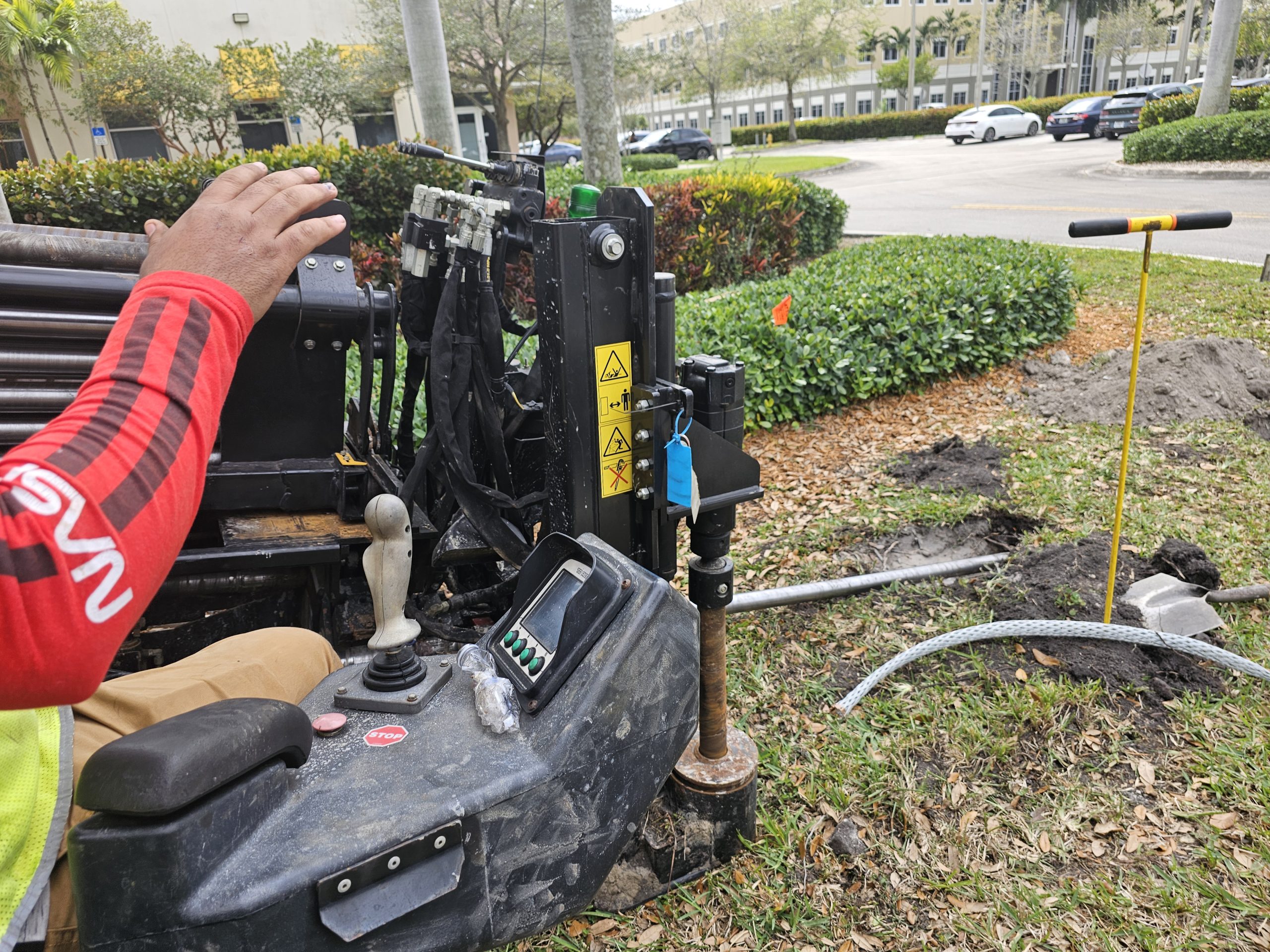
How AM Utility Contractors Supports South Florida Infrastructure Projects
Directional drilling can provide a practical solution for installing underground infrastructure while minimizing unnecessary surface disruption.
At AM Utility Contractors, we provide horizontal directional drilling and underground utility services for projects throughout South Florida.
Our team works with contractors, developers, property owners, and project teams to support underground infrastructure installations involving telecommunications, utilities, roadway crossings, and other applications where trenchless construction may be appropriate.
We also provide GPR utility scanning, which can help investigate underground conditions before excavation or directional drilling.
Every project is different, which is why we evaluate factors such as the proposed bore path, existing utilities, site access, ground conditions, and installation requirements before determining the appropriate approach.
If you’re planning a South Florida infrastructure project that requires directional drilling or underground utility construction, contact AM Utility Contractors to discuss your project and request a quote.
Frequently Asked Questions